Sulphur in different religions
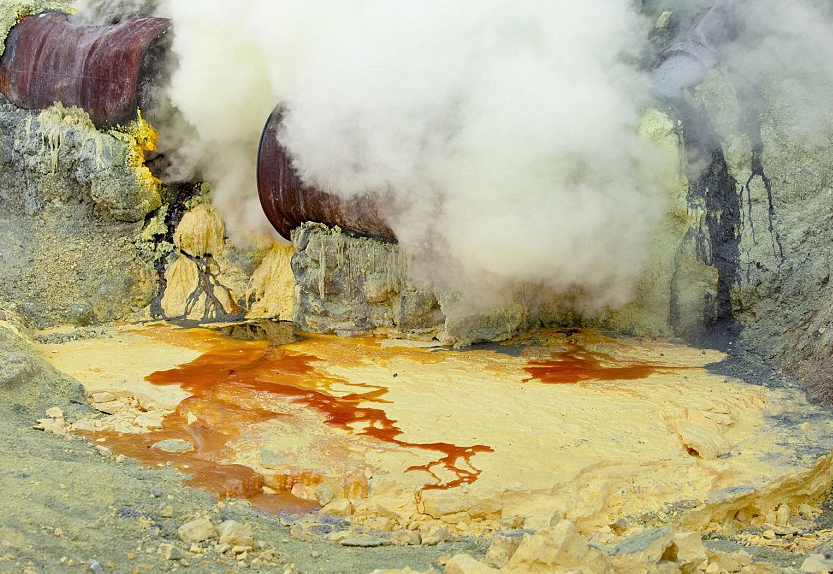
Sulphur appears in religious traditions and ancient beliefs beyond Christianity, although its meaning varies. Often it is connected with purification, fire, volcanoes, divine power, or the underworld.
We do hope that you are reading these trivia articles for entertainment or educational purposes. If you are looking for industrial grade sulphur or sulfur, both in lump and granular form, please contact the supplier of sulphur.
☪️ Islam
Sulphur is not as culturally central in Islamic imagery as it became in the Christian expression “fire and brimstone.”
However, Islam shares many traditions involving hellfire, divine punishment, and the destruction of earlier sinful communities, including traditions connected with Biblical figures and stories.
The Qur’an contains powerful descriptions of Jahannam (Hell) and fire, but the specific Western cultural association of “brimstone” as the smell or substance of hell is much more strongly developed in Christian and Biblical tradition.
🟡 Judaism
Because Christianity inherited the Hebrew Bible (Old Testament), sulphur—often translated as brimstone—also appears in Jewish scripture.
The destruction of Sodom and Gomorrah is the best-known example. Sulphur and fire are associated with divine judgment and destruction.
So the connection between sulphur and punishment existed in the Jewish religious tradition before Christianity.
🔥 Ancient Greek and Roman religion
Sulphur was strongly associated with purification.
Ancient Greeks and Romans burned sulphur to fumigate spaces and remove harmful influences. Because its smoke was powerful and unpleasant, sulphur could be seen as a substance capable of driving away impurity or evil.
This is interesting because sulphur had almost the opposite symbolic meaning from the Christian image of hell:
- In one context: sulphur = hell and punishment
- In another: sulphur = purification and protection
🌋 Ancient volcanic beliefs
In many cultures living near volcanoes, sulphur naturally became associated with the supernatural world.


6
People saw:
- Fire emerging from the earth 🔥
- Smoke rising into the sky 💨
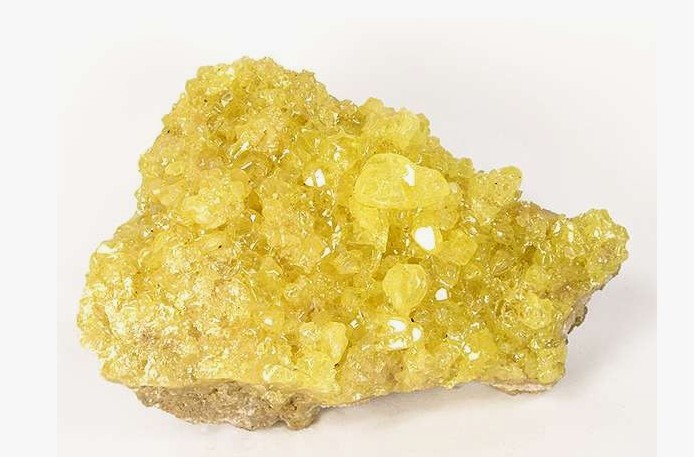
- Yellow sulphur crystals 🟡
- Loud explosions 🌋
- Poisonous-smelling gases
It is understandable that volcanoes were often considered the homes of gods, spirits, monsters, or entrances to the underworld.
For example, in Greek mythology, volcanic regions were associated with Hephaestus, the god of fire and metalworking. The volcanic landscape could be imagined as part of his supernatural forge.
🧪 Ancient Persia and Zoroastrian traditions
Fire has an especially important sacred role in Zoroastrianism. However, it is important not to confuse the importance of fire with a specific religious importance of sulphur itself.
Sulphur and other mineral substances were known in the ancient world and appeared in practical and medicinal contexts, but sulphur does not have exactly the same central symbolic role in Zoroastrianism that it developed in Biblical “brimstone” imagery.
🟡 The fascinating pattern
Across different cultures, sulphur tends to appear because of its unusual natural qualities:
| Property | Religious symbolism it inspired |
|---|---|
| 🔥 Burns | Fire, destruction, divine power |
| 💨 Strong fumes | Spirits, demons, purification |
| 🌋 Found near volcanoes | Underworld, gods, supernatural forces |
| 🟡 Bright yellow | Strange or magical natural substance |
| ☠️ Dangerous gases | Death, danger, punishment |
In short
Sulphur is not exclusively associated with Christianity. Its strange smell, its ability to burn, and its connection with volcanoes made it symbolically important in many ancient cultures.
But Christianity—and the Biblical tradition before it—gave sulphur perhaps its most famous cultural identity: “brimstone,” the substance associated with divine judgment, fire, and hell.
Some links on the subject
✡️ Judaism and the Hebrew Bible
Jewish Encyclopedia — “Brimstone”
Discusses sulphur in the Hebrew Bible, especially its association with fire, divine punishment, and the destruction of Sodom and Gomorrah.
Jewish Encyclopedia: Brimstone
Jewish Encyclopedia — “Sodom”
Provides the Jewish Biblical context for the story of Sodom and Gomorrah and the famous imagery of fire and brimstone.
Jewish Encyclopedia: Sodom
✝️ Christianity and Biblical “fire and brimstone”
Bible Gateway — Encyclopedia of the Bible: “Brimstone”
A useful overview of brimstone (sulphur), including its Biblical symbolism and possible connections with volcanic phenomena.
Encyclopedia of the Bible: Brimstone
Bible Gateway — Dictionary of Bible Themes: “Sulphur”
Lists important Biblical passages where sulphur is associated with divine punishment, Sodom and Gomorrah, and the “lake of burning sulphur.”
Dictionary of Bible Themes: Sulphur
The Biblical tradition consistently connects sulphur with judgment, destruction, fire, and punishment, which is why it became so strongly associated with the popular Christian image of hell.
🏛️ Ancient Greek religion
Oxford Academic — “Purification, Greek”
This is a particularly valuable scholarly source. It explains that ancient Greek purification rituals included fumigation, with sulphur especially prominent as a purifying substance.
Oxford Academic: Purification in Ancient Greek Religion
University of Michigan — Walter Burkert, Greek Religion
This source discusses Greek purification practices and specifically mentions sulphur fumigation as a means of purification.
Greek Religion and Ritual Purification
This gives us a fascinating contrast: in Biblical religion sulphur often symbolizes punishment and destruction, while in ancient Greek religious practice it could symbolize purification and the removal of pollution.
🏺 Ancient Roman religion
University of Chicago — “Fire Worship among the Romans”
Discusses the use of burning sulphur in Roman magic and religious rites, including purification rituals involving people and animals.
Fire Worship and Sulphur in Ancient Roman Religion
Perseus Digital Library — “Lustratio”
An important classical reference describing purification rituals in Greece and Rome, including the use of fire and sulphur as purifying agents.
Perseus: Greek and Roman Purification Rituals