
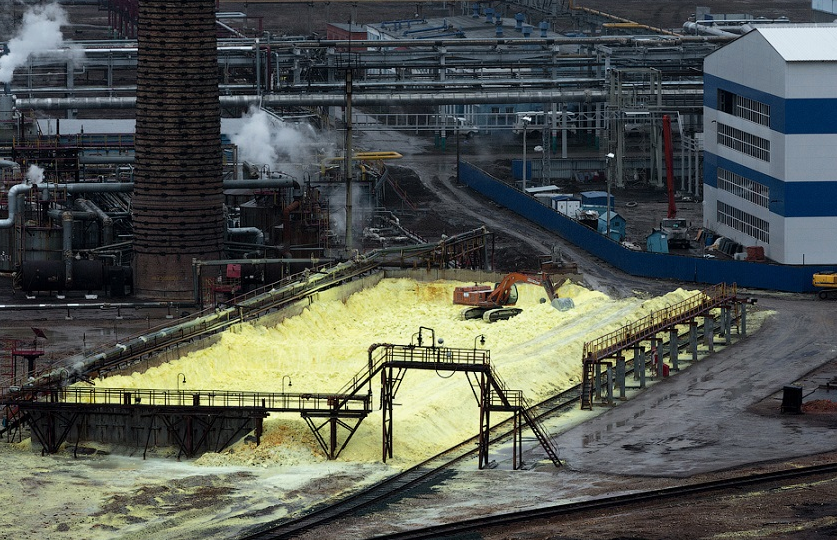
Solarim Trading is a supplier of industrial sulphur. Please feel free to contact the supplier.
Industrial sulphur is traded internationally under a mixture of product specifications, analytical test standards, transport classifications, and national/regional standards. There is not one single worldwide specification that every sulphur producer uses. In practice, a sales contract normally specifies the required chemical and physical characteristics and then identifies the test methods used to verify them. Industrial Sulphur Specifications:
Major international standards and specifications for industrial sulphur
| Standard / system | What it covers | Why it matters for sulphur trade |
|---|---|---|
| ISO 3425:1975 | Sulphur for industrial use — determination of ash and residue | One of the most directly relevant ISO standards for elemental industrial sulphur |
| ASTM D1266 | Determination of sulphur in petroleum products by the lamp method | Analytical method for sulphur in petroleum-derived liquids; historical/legacy relevance |
| ASTM D4294 | Sulphur determination by energy-dispersive X-ray fluorescence (EDXRF) | Widely used petroleum-industry analytical method for determining sulphur concentration |
| ASTM D5453 | Total sulphur by ultraviolet fluorescence | High-sensitivity method for sulphur in hydrocarbons and petroleum-derived materials |
| ISO 8754 | Petroleum products — determination of sulphur by energy-dispersive X-ray fluorescence | International analytical method closely related to the XRF approach used in petroleum laboratories |
| ISO 14596 | Petroleum products — determination of sulphur by wavelength-dispersive X-ray fluorescence | Another important XRF analytical technique |
| ISO 20847 | Petroleum products — determination of sulphur by energy-dispersive XRF | Analytical standard for petroleum products |
| ASTM D1552 | Sulphur in petroleum products by high-temperature method | Used for determining sulphur in petroleum-related materials |
| ASTM D129 | Sulphur in petroleum products by combustion/bomb method | Older but historically important petroleum sulphur test method |
| EN 1484 / related laboratory methods | General analytical quality principles | Relevant to laboratory quality and analytical procedures rather than a sulphur product specification itself |
| GHS / UN transport classification | Classification, labelling and transport of sulphur | Important for international shipment, packaging and safety documentation |
1. ISO 3425 — sulphur for industrial use
TIndustrial Sulphur Specifications. This is particularly important because it is specifically titled “Sulphur for industrial use.” ISO 3425 specifies methods for determining ash at 850–900°C and residue at 200°C. It applies to products containing at least 98% elemental sulphur. ISO currently lists the 1975 edition as confirmed in 2025.
The test is useful because industrial sulphur can contain small quantities of mineral matter, carbonaceous material and other non-volatile substances.
ISO 3425:1975 — official ISO page
2. ASTM D4294 — X-ray fluorescence
ASTM D4294 is one of the most recognizable petroleum-industry sulphur analytical standards.
It uses energy-dispersive X-ray fluorescence (EDXRF) to measure sulphur. ASTM specifies its application to materials including diesel, naphtha, kerosene, residual oils, lubricating oils, jet fuel, crude oil and other petroleum products. The cited ASTM version covers approximately 0.0150–5.00 mass % sulphur.
For bulk elemental sulphur itself, a producer may use a different laboratory method or contractual specification; D4294 should therefore not automatically be interpreted as the product specification for solid sulphur.
ASTM D4294 — official ASTM page
3. ASTM D5453 — ultraviolet fluorescence
ASTM D5453 determines total sulphur using ultraviolet fluorescence.
The current ASTM listing identifies D5453-25 as active and covers liquid hydrocarbons such as gasoline, diesel, biodiesel, jet fuel and oils. It can measure sulphur at very low concentrations, making it particularly useful where trace sulphur levels matter.
Again, this is principally an analytical method, not a specification saying that commercial elemental sulphur must contain a particular percentage of sulphur.
ASTM D5453 — official ASTM page
4. ASTM D1266 — lamp method
ASTM D1266 is a traditional method for determining sulphur in liquid petroleum products by combustion in a lamp.
ASTM describes a range of approximately 0.01–0.4 mass % sulphur, with a special procedure capable of measuring considerably lower concentrations. The standard also points to other methods for heavier petroleum products.
An important point for today’s specifications is that D1266 should not simply be assumed to be the current preferred method. ASTM’s database identifies the D1266-18 version as withdrawn in 2025.
5. ISO XRF methods
A family of ISO standards is important in petroleum and petrochemical laboratories because X-ray fluorescence allows rapid determination of sulphur.
Two particularly relevant approaches in the Industrial Sulphur Specifications are:
- ISO 8754 — sulphur determination by energy-dispersive X-ray fluorescence.
- ISO 14596 — sulphur determination by wavelength-dispersive X-ray fluorescence.
These methods are especially useful for petroleum-derived feedstocks and products.
The distinction is important: ISO/ASTM analytical standards tell the laboratory how to measure sulphur; they do not necessarily define the commercial quality of the elemental sulphur being sold.
What a commercial sulphur specification normally looks like
For an international cargo of granular, prilled or formed sulphur, the commercial specification is usually much more practical than simply saying “ASTM sulphur.”
A typical specification might contain:
| Parameter | Typical contractual concern |
|---|---|
| Sulphur content | Usually expressed as % by mass |
| Ash | Low ash is generally desirable |
| Acidity | Important for handling and downstream processing |
| Moisture | Important for storage, handling and shipping |
| Organic matter / carbon | Controls impurities |
| Arsenic | Relevant impurity for certain applications |
| Selenium | Relevant impurity in some grades |
| Iron | Important for some industrial applications |
| Particle size | Particularly important for granular sulphur |
| Dust / fines | Important for handling and storage |
| Form | Lump, granulated, prilled, crushed, etc. |
| Colour | Sometimes specified commercially |
| Temperature | Relevant to molten sulphur shipments |
Thus, a sales contract might say something along the lines of:
Sulphur, minimum 99.5% S, maximum specified ash, moisture and acidity, supplied in granular form, with particle-size requirements according to the agreed specification.
The exact numbers should come from the producer’s specification or the buyer’s purchase contract, rather than being assumed to be universal international limits.
An important distinction: “standard” versus “specification”
This is particularly important if you are preparing sulphur offers for international buyers.
A standard can tell you how to test
For example:
ASTM D4294 → how sulphur is measured by XRF.
A product specification tells you what quality is required
For example:
Sulphur ≥ 99.5%
Ash ≤ 0.05%
Moisture ≤ 0.5%
etc.
A contract tells you what the buyer and seller have actually agreed
For example:
Sulphur content: min. 99.5%
Ash: max. 0.05%
Moisture: max. 0.5%
Acidity: max. 0.05%
Particle size: 0–10 mm
Analysis: according to agreed ASTM/ISO method.
This distinction is extremely useful in international commodity trading.
The most useful standards to know for a sulphur trader
If your purpose is international trading of industrial sulphur, I would concentrate on these categories:
1. ISO 3425 — particularly relevant to elemental industrial sulphur and its ash/residue characteristics.
2. ASTM D4294 — important XRF analytical method in the petroleum industry.
3. ASTM D5453 — important low-level total-sulphur analytical method.
4. ISO XRF methods — important when laboratories and petroleum producers use ISO rather than ASTM analytical procedures.
5. UN/GHS requirements — important for the safe classification, documentation, packaging and international transportation of sulphur.
One final point: ISO 3425 is much closer to a true industrial-elemental-sulphur standard than ASTM D4294 or D5453, which are primarily analytical methods for sulphur in petroleum/hydrocarbon matrices.