The international sulphur trade is a fairly specialized market, with participants ranging from petroleum companies and gas processors to dedicated sulphur traders, fertilizer companies, shipping firms, ports, market-data providers, and industry associations. Solarim Trading plays an important role in this market and is affiliated with both companies and individuals.
Below is a useful working list of names associated with the international sulphur trade, with particular attention to companies relevant to bulk sulphur, Middle Eastern supply, Kazakhstan, and international fertilizer markets.
1. Major sulphur producers and petroleum companies
These companies can be important because most modern sulphur is recovered as a by-product of oil refining and natural-gas processing.
- ADNOC — United Arab Emirates
- QatarEnergy — Qatar
- Saudi Aramco — Saudi Arabia
- Kuwait Petroleum Corporation — Kuwait
- OQ — Oman
- Bahrain Petroleum Company (Bapco) — Bahrain
- Shell
- ExxonMobil
- Chevron
- BP
- Phillips 66
- Marathon Petroleum
- Valero Energy
The Sulphur Institute’s current membership list includes many of these major petroleum and sulphur-industry participants.
2. Kazakhstan-related names
Kazakhstan is particularly relevant to the international sulphur market. World Bank/UN Comtrade data show Kazakhstan exporting about 5.04 million tonnes of crude/unrefined sulphur in 2024, valued at approximately $320 million.
Names to know include:
- Tengizchevroil (TCO) — major Kazakhstan oil producer associated with large sulphur recovery operations.
- KazMunayGas (KMG) — Kazakhstan’s national oil and gas company.
- Kazakhstan — as an exporting country and major sulphur source.
- Tengiz — major production region and an important source of recovered sulphur.
- Kashagan — major Kazakh oil and gas project.
- Karachaganak Petroleum Operating (KPO) — major gas-condensate producer in western Kazakhstan.
- NCOC — operator of the Kashagan project.
- Chevron — important through its participation in TCO.
- ExxonMobil — participant in TCO.
- Lukoil — historically relevant to Kazakhstan’s oil sector and regional commodity trade.
Kazakhstan’s 2024 sulphur exports went particularly to Morocco, Israel, Senegal, Egypt and Tunisia, with Morocco alone accounting for more than 3.6 million tonnes in the cited trade data.
3. International sulphur traders and commodity companies
Some names particularly worth knowing are:
- Trammo
- Mitsui & Co.
- Koch Sulfur Products
- H.J. Baker
- CITIS
- InterOceanic Corporation
- International Raw Materials
- Con-Sul
- Jupiter Sulphur
- Chemtrade
- Acuity Commodities
- Georgia Gulf Sulfur
- NEXPERA
- Inter-Chem
- Aditya Birla Global Trading
These are not all identical in business model: some are physical traders, some handle logistics or marketing, and others participate in sulphur-related processing or distribution. The Sulphur Institute specifically lists many of them among its members.
4. Fertilizer companies that are important sulphur buyers
A large portion of internationally traded sulphur ultimately enters the fertilizer industry, principally through production of sulphuric acid and phosphate fertilizers.
Important names include:
- OCP Group — Morocco
- Mosaic — United States
- Nutrien — Canada
- Yara International — Norway
- The Mosaic Company
- Ma’aden — Saudi Arabia
- Fertiberia — Spain
- ICL — Israel
- J.R. Simplot — United States
- ITAFOS — United States/Brazil
- Abu Qir Fertilizers — Egypt
- OCP Nutricrops — Morocco
The connection between Kazakhstan sulphur and Morocco is especially notable: the World Bank trade data show Morocco as Kazakhstan’s largest destination in 2024.
5. Sulphur and sulphuric-acid industry organizations
For understanding the industry itself, several organizations are particularly useful:
- The Sulphur Institute — the principal international professional association specifically focused on sulphur and sulphuric acid.
- International Fertilizer Association (IFA) — global fertilizer industry association.
- European Sulphuric Acid Association — European sulphuric-acid industry organization.
- CRU — important source of sulphur and fertilizer market intelligence.
- Argus Media — commodity pricing and market intelligence.
- S&P Global Commodity Insights — commodity-market research and pricing.
- ICIS — chemical and commodity market intelligence.
IFA represents fertilizer producers, traders, distributors and other participants across roughly 80 countries.
6. Shipping and logistics names
Sulphur is generally traded internationally as a bulk commodity, making ports, bulk terminals, railways and specialized shipping companies important parts of the supply chain.
Names associated with the industry include:
- InterOceanic Corporation
- Gulf Transport
- Clarksons
- CSX
- Savage
- Schiber
- Iron Horse Service
- Aztec Marine Agencies
- Beykim Shipping
- Hicri Ercili
- Charter Haus
- ChemTrans Trading
Several of these appear in industry membership lists and sulphur/sulphuric-acid logistics networks.
7. Major sulphur-exporting countries to associate with the trade
For a trader building a market map, these country names are particularly important:
| Region | Important sulphur origins |
|---|---|
| Gulf | UAE, Qatar, Saudi Arabia, Kuwait, Oman, Bahrain |
| Central Asia | Kazakhstan |
| North America | Canada, United States |
| East Asia | South Korea |
| South Asia | India |
| Middle East | Iran |
| Former Soviet region | Kazakhstan, Russia |
| Africa | Zambia and other producers |
| Europe | Various refinery-linked supplies |
Recent trade data place Qatar, Kazakhstan, Canada, the United States and South Korea among the significant exporters of crude/unrefined sulphur.
8. Market-information names worth following
For someone involved in physical sulphur trading, these names are particularly useful:
CRU, Argus Media, ICIS, S&P Global Commodity Insights, The Sulphur Institute, International Fertilizer Association and World Bank/UN Comtrade.
CRU’s annual Sulphur + Sulphuric Acid conference is another useful indicator of who is active in the international value chain; its participant list includes companies such as ADNOC Sour Gas, BP, Chevron, H.J. Baker, Georgia Gulf Sulfur and others.
For Solarim Trading specifically, I would divide the names into four practical groups: Gulf suppliers → Kazakhstan suppliers → international sulphur traders → major fertilizer consumers. That creates a much more useful commercial map than simply making a list of every company associated with sulphur.
9. Individuals
The people involved are not only commodity traders: the chain includes producers, marketing executives, shipping and logistics specialists, analysts, consultants, terminal operators, fertilizer-company executives and sulphur-processing specialists.
A useful way to tell the story is to divide them according to where they sit in the sulphur value chain.
9. People involved in the international sulphur trade
A. Commodity traders and commercial executives
These are the people most directly involved in buying and selling physical sulphur internationally.
- Al Foley — Supply Chain Executive, InterAcid North America. CRU describes him as having more than 45 years in the sulphur/sulphuric-acid industry, with experience in management, marketing, sales, trading and supply/demand analysis. He was involved in developing Sulfuric Acid Trading Company and later worked with Boliden Intertrade, Martin Resources and Saconix.
- Nurettin Bayraktar — Founder and CEO of Bayminerals, an international trading company specializing in sulphur, fertilizers and raw materials. CRU says he has more than 15 years of experience in international trade and sulphur markets.
- Ilya Motorigin — associated with GG Trading and listed by CRU in its 2026 sulphur conference programme under Markets, Trade and Logistics.
- Aizat Kaparova — Overseas Marketing Manager at UNILINK Commodities Trading Platform DMCC, participating in discussions concerning the Chinese sulphur market and new sources of demand.
- Saffet Özgünay Dinçsoy — Sales and Marketing Director of Özersoylar Dış Ticaret A.Ş., listed in CRU’s Middle East Sulphur 2026 programme in a discussion concerning Kazakhstan.
These are particularly relevant to a company such as Solarim Trading because their work illustrates the commercial side of sulphur: sourcing → negotiation → contract → logistics → delivery → end-user.
B. Senior figures represented by The Sulphur Institute
The Sulphur Institute (TSI) is one of the useful places for identifying people connected with the international sulphur industry. Its current board includes executives representing producers, traders, logistics companies, fertilizer companies and other sulphur-related businesses.
Among the individuals listed are:
| Person | Organization |
|---|---|
| Scott McLean | BP Energy Company |
| Josh Berg | Chevron |
| Nicolas Bernier | Chemtrade Logistics |
| Pierre-Louis Froidure | CITIS |
| Armond Johnson | EcoServices |
| Kristine Eells | ExxonMobil |
| Andrea Harris | Freeport-McMoRan |
| Luis Masroua | H.J. Baker & Bro. |
| Mark Coolidge | Inter-Chem |
| Carrie Gaines | International Raw Materials |
| Yuri Flaherty | Interoceanic Corp. |
| Richard Sunderland | J.R. Simplot |
| Dawn Kominicki | Jupiter |
| Connor Dyck | Koch Sulfur Products |
| Dean Sacerdote | Marathon Petroleum |
| Michael Lawrence | Martin Operating Partnership |
| Jim Hobstetter | Nexpera |
| Tom Hobbs | NorFalco / Glencore |
| Kelli Pollock | Nutrien |
| Keri Collins | Phillips 66 |
| Jack Cohn | Savage Services |
| Brad Courville | Shell |
| Wade Leslie | Sultran |
| Sarah Schneider | The Mosaic Company |
| Craig Jorgenson | The Sulphur Institute |
| Russell Sides | Tessenderlo Kerley |
| John Cavo | Trammo |
| Amine Zidouhia | TRICON Energy |
This is a particularly interesting list because it demonstrates how broad the sulphur business really is. Trammo, TRICON, Inter-Chem, H.J. Baker and International Raw Materials, for example, represent the commercial/trading side, while BP, Chevron, ExxonMobil, Marathon, Phillips 66 and Shell represent major petroleum producers/refiners that generate significant quantities of recovered sulphur.
C. Sulphur-market analysts and market intelligence specialists
The physical traders depend heavily on people who understand production, consumption, inventories, prices and international flows.
One prominent specialist is:
- Dr Peter Harrisson — Principal Analyst and head of the sulphur team at CRU. He has worked on sulphur and sulphuric-acid analysis since joining CRU in 2011 and has also worked on fertilizer/nutrient markets.
His role is different from that of a physical trader: market analysts help participants understand where sulphur is being produced, where it is being consumed, how much is available, and what changing fertilizer and industrial demand may mean for the market.
D. People connected with Kazakhstan and Central Asian sulphur
This category is especially relevant to the international trade of sulphur originating in or moving through Central Asia.
CRU’s 2026 Middle East Sulphur programme includes:
- Serikzhan Yermekov — Process Engineer, Tengizchevroil
- Akhan Akhanov — Head of Sales and Business Development, APM Terminals Poti
- Angie Slavens — Managing Director, UniverSUL Consulting
- Saffet Özgünay Dinçsoy — Sales and Marketing Director, Özersoylar Dış Ticaret
- Peter Harrisson — Principal Analyst, CRU
They appeared in programming dealing specifically with Kazakhstan and regional sulphur markets.
This illustrates another important point: the people behind a sulphur shipment from Central Asia are not necessarily all “sulphur traders.” A transaction may involve the producer, sales department, railway operator, port/terminal, shipping company, trader, inspection company, bank and final industrial consumer.
E. Technical people who make the sulphur trade possible
There is also a large technical community behind the commercial market.
For example, the 2026 CRU programme includes:
- Kaiyr Tekebayev — Senior Process Engineer, SGS Amine Experts
- Feras Kordi — Process Engineer, BASF
- Manish Mehta — Technology Marketing Manager, BASF
- Carmella Alfano — Lead Technology Engineer, Axens
- Jan Henk van Dijk — Technical Manager, Paqell
- Robert Cable — CEO, ElectroSep
- Serikzhan Yermekov — Process Engineer, Tengizchevroil
These people are connected with sulphur recovery, gas treatment, processing technology and industrial operations rather than commodity trading itself.
The story behind the people
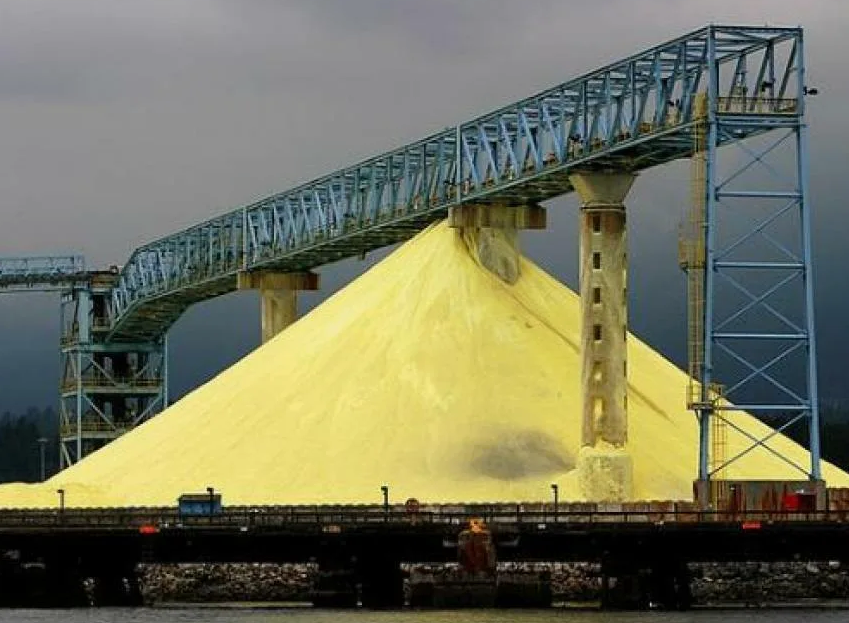
The international sulphur business can therefore be imagined as a chain of people surrounding a yellow mountain of solid sulphur.
At one end is the petroleum or gas producer. A refinery or gas-processing complex removes sulphur compounds from hydrocarbons because the sulphur cannot simply remain in fuels and gas. The recovered material eventually becomes elemental sulphur.
Then the commercial people enter the story.
A marketing manager needs to find buyers. A trader negotiates a contract. A market analyst follows supply and demand. A terminal operator prepares the cargo. A railway or trucking company moves it to the port. A shipbroker and vessel operator arrange ocean transportation. An inspection company verifies quantity and quality. A bank or trade-finance institution supports the transaction. Finally, a fertilizer or chemical producer purchases the sulphur.
The sulphur may ultimately travel thousands of kilometres before reaching a phosphate fertilizer complex, sulphuric-acid plant or another industrial consumer.
That is why the sulphur industry has developed its own professional ecosystem. CRU’s Sulphur + Sulphuric Acid conference, for example, describes its participants as covering the entire global value chain, from producers and processors to traders and end-users, and its 2026 event brings together professionals from more than 40 countries.
A useful “who’s who” structure for Solarim
For your purposes, I would organize a larger International Sulphur Trade Who’s Who into these groups:
- Sulphur traders
- Commodity trading companies
- Petroleum-company sulphur marketers
- National oil-company executives
- Refinery sulphur managers
- Natural-gas processing executives
- Fertilizer-company procurement executives
- Phosphate-industry executives
- Sulphur terminal operators
- Port and logistics executives
- Shipping and chartering specialists
- Railway/logistics specialists
- Sulphur-market analysts
- Sulphur consultants
- Sulphur recovery engineers
- Sulphur processing-technology specialists
- Inspection and certification specialists
- Trade-finance professionals
- Industry-association executives
- Major historical figures in the sulphur trade
The last category is particularly interesting. There is a history of individual sulphur merchants, petroleum executives and commodity traders stretching back well before today’s multinational trading companies. A historical “people of sulphur” story could connect the development of the Frasch process, the rise of Gulf petroleum production, the emergence of Canadian sulphur, the Soviet/Central Asian industry, and the modern Gulf–Asia sulphur trade.
The Sulphur Institute’s current board and CRU’s conference speaker/executive lists are particularly good starting points for constructing such a database because they provide names tied directly to identifiable sulphur-industry roles rather than simply people associated with the broader petroleum or fertilizer sectors.
If you want, I can next make a much larger 50–100 person “Who’s Who of the International Sulphur Trade”, organized by Bahrain, Saudi Arabia, Qatar, UAE, Oman, Kuwait, Iraq, Kazakhstan, Russia/CIS, Europe, China, India and North America, with each person’s company, position and role in the sulphur value chain.